
Are Bananas Good for Your Gut? (A Guide for Women Over 35)
May 21, 2026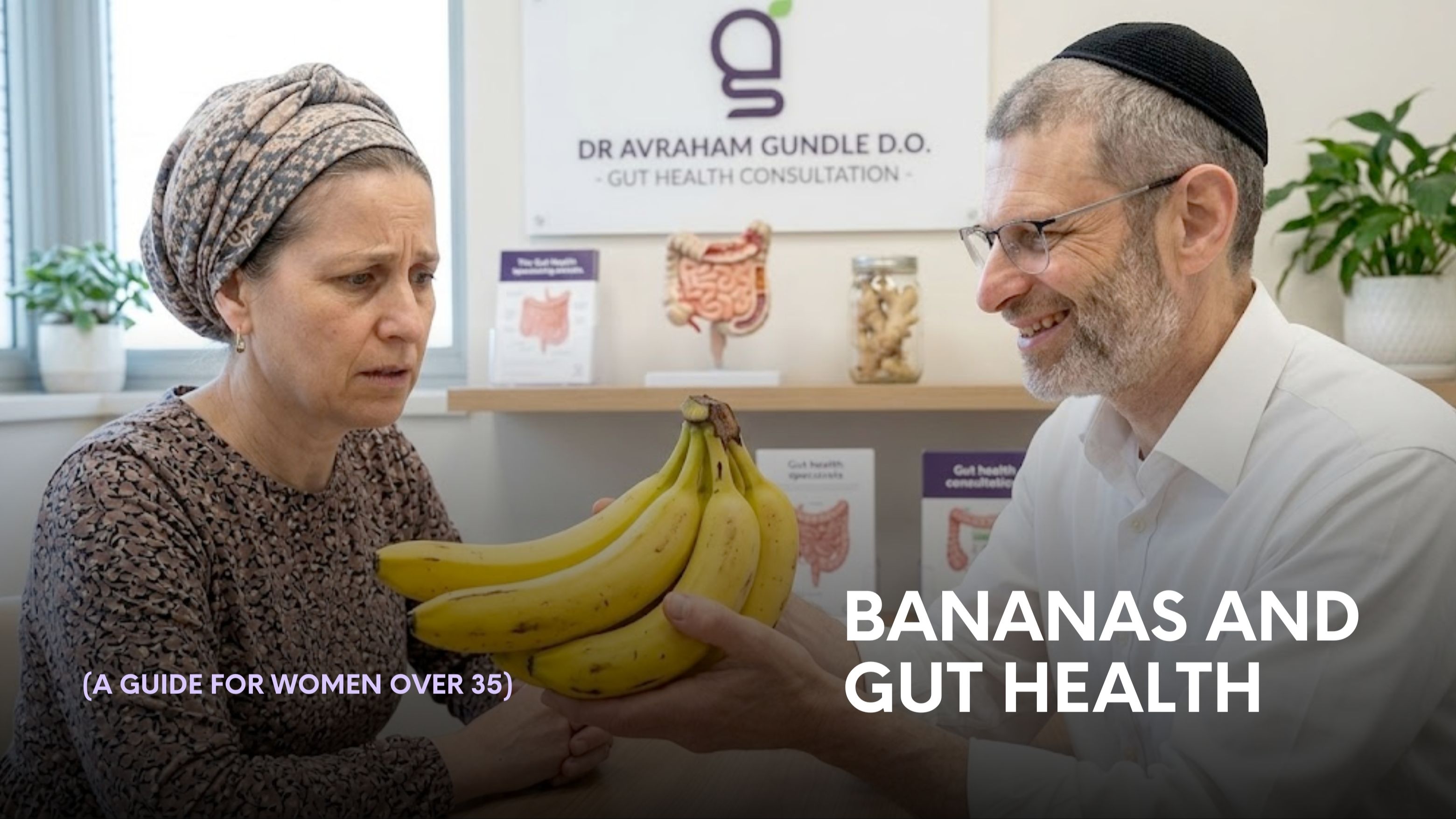
Bananas seem like the safest food on earth. They are soft, bland, easy to eat, and something most of us have been reaching for since childhood. When your stomach is upset, someone always says: Eat a banana.
But here is the thing most people do not know. The ripeness of your banana completely changes how your gut responds to it. A firm banana with green tips is a very different food from a brown-spotted, mushy banana, and your gut knows the difference even if you do not.
As a gut health specialist working with women over 35, I want to explain this properly so you stop accidentally triggering your symptoms with a food you thought was safe.
The Short Answer
Bananas can be good, and can be bad for women with gut issues. The FODMAP content of a banana changes dramatically based on ripeness. A firm, slightly green banana is low FODMAP and contains beneficial resistant starch. A ripe banana with brown spots is high in fructans and can trigger significant bloating.
The rule is simple: the greener the banana, the safer it is for your gut. The riper and sweeter it gets, the more likely it is to cause you problems.
The "Gut Science" Breakdown
FODMAP Rating
Bananas have a ripeness-dependent FODMAP rating. According to Monash University, a firm, just-yellow banana (about one medium fruit) is low FODMAP. As the banana ripens and develops brown spots, the starch converts to sugars, including fructans, which push it into the high-FODMAP category.
This makes bananas one of the trickiest foods for gut-sensitive women. The banana you bought on Monday (firm and slightly green) might be perfectly safe. By Thursday, when it is soft and spotted, it could trigger bloating and gas. Same banana, completely different effect on your gut.
Fructans are the main FODMAP concern in ripe bananas. These are the same fermentable carbohydrates that make garlic and onion so problematic. As a banana ripens, the resistant starch that made it safe breaks down into these fermentable sugars.
If you have been eating bananas without issues and then suddenly react to one, check the ripeness. That is almost certainly the variable that changed.
(Embed this YouTube video: https://www.youtube.com/watch?v=kpq9BAAOIxU)
Why It Helps
Slightly green or just-yellow bananas are genuinely good for your gut. They contain resistant starch, a type of fiber that your small intestine does not digest. Instead, it travels to your colon, where it feeds beneficial bacteria like Bifidobacteria and produces butyrate, a short-chain fatty acid that nourishes the cells lining your colon.
A 2019 systematic review published in Nutrients found that green banana consumption was associated with improved gut motility, reduced inflammation, and enhanced mineral absorption. The resistant starch in green bananas acts as a prebiotic, selectively promoting the growth of beneficial bacteria over harmful ones.
Bananas are also a good source of potassium, vitamin B6, and magnesium. For women over 35, potassium supports healthy blood pressure, B6 is critical for hormone metabolism, and magnesium helps with muscle relaxation, sleep, and stress management.
For more detail on how banana ripeness affects nutrition, see Healthline's complete guide to resistant starch, which explains why green bananas are such a powerful prebiotic food.
Watch Out For
Ripe bananas (brown spots, soft flesh, very sweet) are high in fructans and can trigger bloating, gas, and abdominal discomfort in women with IBS, SIBO, or fructan sensitivity. The riper the banana, the higher the fructan content.
Banana smoothies are another common problem. When you blend a banana into a smoothie, you are often combining it with other high-FODMAP ingredients like honey, mango, or oat milk, stacking FODMAPs and overwhelming your gut's capacity.
Dried banana chips are concentrated in fructans and sugars, making them a guaranteed trigger for sensitive individuals. Avoid them entirely during a low-FODMAP protocol.
Medical News Today's breakdown of banana nutrition provides a full nutrient profile and explains why potassium matters for women's cardiovascular health.
Dr. Gundle's "Weed, Seed, & Feed" Tip
In my Weed, Seed, and Feed protocol, I use bananas strategically based on ripeness.
During the Weed phase, I recommend firm, slightly green bananas (or green banana flour in smoothies) as a gentle source of resistant starch. This type of starch does not feed the bacteria we are trying to clear; instead, it passes through the small intestine and nourishes the colon lining.
During the Feed phase, just-yellow bananas become a useful prebiotic tool for feeding the beneficial bacteria we have introduced. The key is to eat them before they ripen past the yellow stage.
My practical tip: buy green bananas and eat them within one to two days once they turn yellow. If they start getting brown spots, freeze them immediately. Frozen banana slices in a smoothie are lower in available fructans than a fresh overripe banana because the cold slows the enzymatic conversion.
I break all of this down in my free Gut-Healing eBook, including which foods to eat during each phase and how to build your own Weed, Seed, and Feed plan.
How to Eat This (If You Must)
Here is how to eat bananas without the gut fallout.
First, choose firm bananas with green tips or a uniform yellow color. No brown spots. The banana should feel firm when you squeeze it gently, not soft or mushy. This is your safe zone for FODMAP content.
Second, eat only one medium banana per sitting. Even a firm banana can cause issues if you eat two or three at once. One banana is plenty to get the resistant starch and potassium benefits without exceeding your FODMAP threshold.
Third, pair your banana with fat or protein. A banana on its own (especially on an empty stomach) delivers its sugars quickly. Pair it with a tablespoon of almond butter, a handful of walnuts, or some full-fat yogurt to slow digestion and reduce the fermentation response.
Fourth, consider green banana flour. If you want the prebiotic benefits of resistant starch without worrying about ripeness, green banana flour is an excellent option. Stir one to two teaspoons into a smoothie, oatmeal, or water. Start small because it is concentrated, and too much at once can cause gas as your microbiome adjusts.
If bananas consistently trigger symptoms regardless of ripeness, blueberries are a reliable low-FODMAP fruit substitute that offers similar potassium and antioxidant benefits.
A Story You Might Relate To
Here is something I encounter in my practice. At home, a patient takes a banana from the fruit bowl every morning. Some days they feel fine. Other days, by mid-morning, they feel bloated and uncomfortable. They start to think they are developing a banana intolerance.
When I review their food diary, the pattern is clear. On days they ate a firm, just-yellow banana, they were fine. On days they ate a riper banana (because it was sweeter and easier to eat), the bloating kicked in. Same food, different ripeness, completely different gut response.
We set a simple rule: buy bananas green on Monday, eat them Tuesday through Thursday while they are still firm and yellow, and freeze anything that starts spotting. Problem solved.
Since then, they have been bloat-free on banana mornings for three months now. No elimination needed, no expensive testing, just understanding how ripeness changes the FODMAP content of a simple banana.
Frequently Asked Questions
Are green bananas better for your gut than ripe ones?
Yes, green or just-yellow bananas are significantly better for gut health than ripe ones. Green bananas are high in resistant starch, which acts as a prebiotic and feeds beneficial gut bacteria. As bananas ripen, the resistant starch converts to fructans, which are fermentable sugars that cause bloating and gas in people with IBS or gut sensitivity.
Do bananas cause bloating?
Ripe bananas with brown spots can cause bloating because they are high in fructans, a type of FODMAP that ferments in the gut. Firm, just-yellow bananas are low in fructans and generally well tolerated. The ripeness of the banana is the deciding factor in whether it causes bloating.
Can I eat bananas with IBS?
Yes, you can eat bananas with IBS, but choose firm, just-yellow bananas and limit yourself to one medium banana per sitting. Avoid ripe bananas with brown spots, banana chips, and banana smoothies that combine multiple high-FODMAP ingredients. Pairing your banana with protein or fat also helps reduce the fermentation response.
The Bottom Line
Bananas are a perfect example of how a food's impact on your gut can change based on how you eat it. The banana itself is not the problem. The ripeness, portion, and timing are what determine whether it helps or hurts you.
If you have been avoiding bananas because of bloating, try buying them green, eating them firm, and pairing them with fat or protein. You might find that bananas are back on the menu.
Understanding your body's signals is the foundation of gut healing. And sometimes, the answer is not cutting a food out. It is learning how to eat it correctly.
Heal Your Gut Program is a step-by-step roadmap to reclaiming your digestion. It is structured into two paths, so you get exactly the level of support you need right now. The Heal Your Gut Program comes up on a rolling basis, and you can find the general page here: Heal Your Gut Program.
You can also join the Heal Your Gut Academy, Dr. Avraham's community for people who need help with their gut and can share and learn safely. Many women have recorded breakthroughs from Dr. Avraham's program, and you can read their stories here: Gut Health Success Stories.
