
What Broccoli Can Do in Your Gut? (A Guide for Women Over 35)
May 21, 2026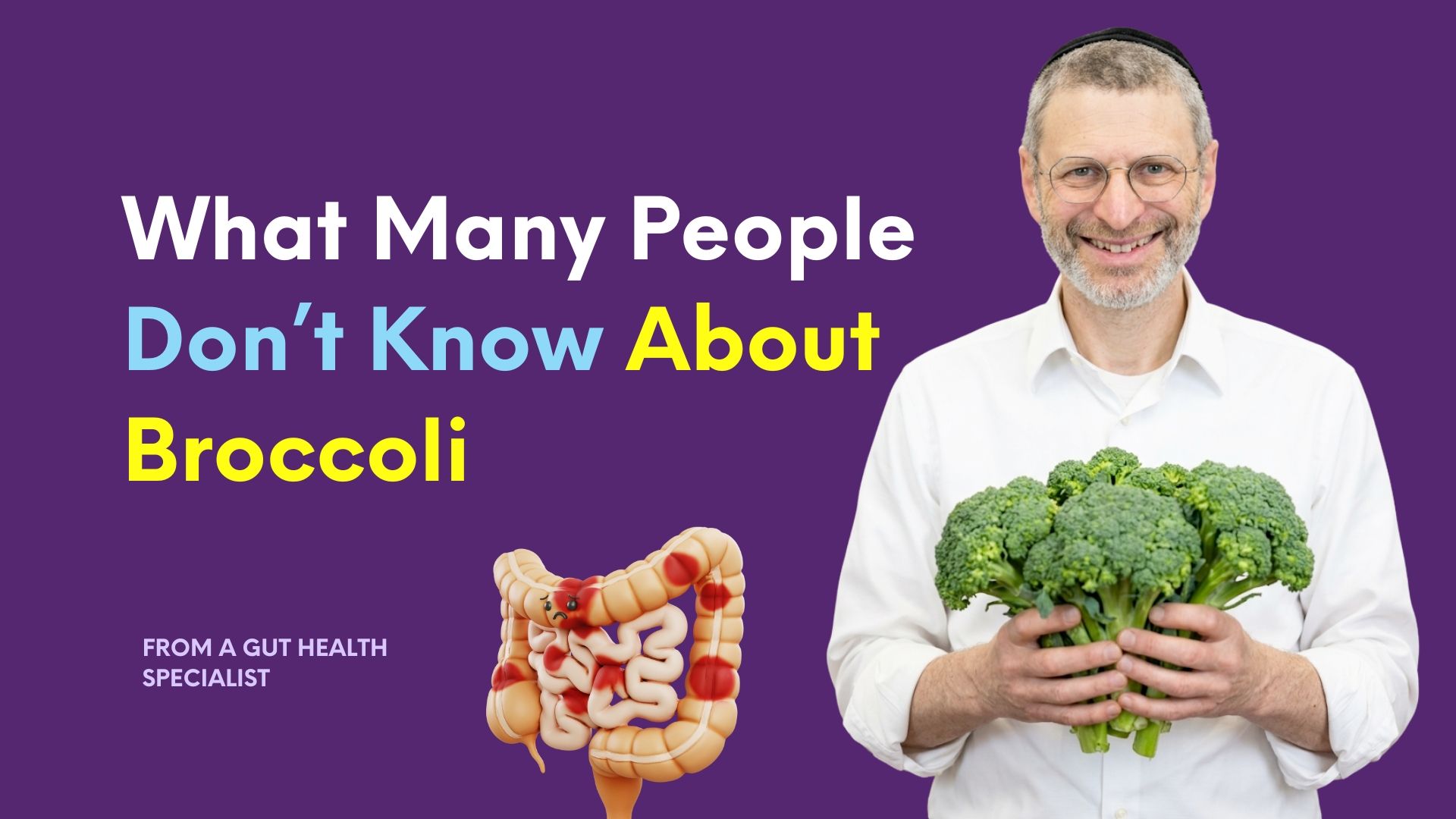
You have probably heard that broccoli is one of the healthiest vegetables you can eat. It is packed with vitamins, minerals, and powerful cancer-fighting compounds. Your doctor tells you to eat more of it. Every health article lists it as a superfood.
But if you are a woman over 35 with a sensitive gut, eating broccoli might be the reason you spend the rest of the evening curled up on the couch with a swollen belly. Not because broccoli is bad for you, but because you are probably eating the wrong part of it.
People in my Heal your Gut Academy know the answer. But since you are here, let me explain the difference, because this one detail can change your entire relationship with broccoli.
The Short Answer
Women with gut issues need to be careful with broccoli. The florets (the green tops) are low FODMAP in portions of about three-quarters of a cup (75 grams). The stalks are high FODMAP and are a major source of bloating and gas.
Most people eat both the florets and the stalks without thinking about it. If you have been bloating after broccoli, the stalks are almost certainly the problem.
The "Gut Science" Breakdown
FODMAP Rating
Broccoli has a split FODMAP rating. According to Monash University, broccoli florets (the heads) are low FODMAP at servings up to 75 grams (about three-quarters of a cup). The stalks, however, are high FODMAP because they contain significantly more fructans and sorbitol than the florets.
This is one of the most important and least known facts about broccoli. When you buy a head of broccoli and chop it all up together (stalks and florets), you are mixing a low-FODMAP food with a high-FODMAP food and turning your entire dish into a bloating trigger.
The solution is simple but requires a small change in how you prepare broccoli. Cut off the florets where they meet the stalk. Use the florets in your cooking. Discard the stalks (or set them aside for someone without gut issues).
Steaming is the best cooking method for broccoli because it softens the fiber and makes it easier to digest without destroying the heat-sensitive nutrients like sulforaphane and vitamin C.
(Embed this YouTube video: https://www.youtube.com/watch?v=w74tadgaNb8)
Why It Helps
Broccoli florets are a nutritional powerhouse. They are one of the richest food sources of sulforaphane, a compound that has been extensively studied for its role in detoxification, cancer prevention, and reducing inflammation throughout the body, including the gut.
A 2018 study published in the Journal of Clinical Biochemistry and Nutrition found that daily broccoli sprout consumption helped normalize bowel habits and showed positive effects on gut bacterial composition in healthy adults. Sulforaphane activates a detoxification pathway in your cells called Nrf2, which helps your body process and eliminate toxins more efficiently.
Broccoli is also rich in vitamin C, vitamin K, folate, and fiber. For women over 35, vitamin K supports bone health, folate is essential for cell repair, and the fiber supports regular bowel movements.
To learn more about the cancer-protective compounds in broccoli, see Healthline's guide to sulforaphane benefits, including its role in activating Nrf2 detoxification pathways.
Watch Out For
The primary risk with broccoli is the stalk. As mentioned, broccoli stalks are high in FODMAPs and are a common cause of gas, bloating, and abdominal distension. Many women who think they cannot tolerate broccoli have never tried eating only the florets.
Raw broccoli is also significantly harder to digest than cooked broccoli. The raw fiber is tough and requires more digestive effort, which can cause discomfort in women with compromised gut function. If your gut is inflamed or your digestion is sluggish, raw broccoli can sit in your stomach and ferment, producing gas.
Broccoli is also a cruciferous vegetable, which means it contains raffinose, a complex sugar that produces gas when broken down by gut bacteria. This is the same compound that makes beans and cabbage famous for causing flatulence.
The Cleveland Clinic outlines why cruciferous vegetables are so important for health, including their impact on hormone metabolism in women over 35.
Dr. Gundle's "Weed, Seed, & Feed" Tip
In my Weed, Seed, and Feed protocol, I use broccoli florets strategically.
During the Weed phase, I keep cruciferous vegetables to a minimum because the extra gas production can worsen discomfort in a gut that is already inflamed. If a patient tolerates it well, I allow a small portion of well-steamed florets.
During the Feed phase, broccoli florets become a valuable addition because the sulforaphane supports detoxification, and the fiber feeds beneficial bacteria. I gradually increase the portion from half a cup to three-quarters of a cup over a few weeks.
My tip: lightly steam broccoli florets for three to four minutes until they are bright green and slightly tender. Do not boil them into mush because that destroys the sulforaphane. You want them cooked enough to be easy on your gut but not so much that the nutrients are gone.
I break all of this down in my free Gut-Healing eBook, including which foods to eat during each phase and how to build your own Weed, Seed, and Feed plan.
How to Eat This (If You Must)
Here is how to eat broccoli without the bloating.
First, eat only the florets. Cut the florets off where they meet the stalk. This one step eliminates the majority of the FODMAP content. If you are buying frozen broccoli, check whether the bag contains just florets or a mix of florets and stalks.
Second, steam them. Steaming is the gentlest cooking method and preserves the most nutrients. Three to four minutes in a steamer until they are bright green and fork-tender is ideal. You want them cooked through but still with a slight bite.
Third, keep your portion at three-quarters of a cup or less. Even low-FODMAP foods can cause issues in large quantities. A side serving alongside protein and a carb like rice is the perfect way to include broccoli in your meal.
Fourth, add a good fat. Drizzle extra virgin olive oil over your steamed broccoli, or toss it with a little garlic-infused oil for flavor. The fat improves absorption of the fat-soluble vitamins (A, K, and E) in broccoli.
If broccoli consistently causes gas even when you eat only the florets, try zucchini as a substitute. Zucchini is very low FODMAP, easy to digest, and provides a similar bulk and texture in meals without the cruciferous gas issue.
A Story You Might Relate To
Here is a common one. A woman makes a stir-fry with chicken, rice, and broccoli. She chops the entire head of broccoli, stalks and all, into pieces and throws it in the pan. By bedtime, she is so bloated she looks like she swallowed a basketball. She decides broccoli is off her list.
When we work together, I ask her to try something. Buy the same broccoli, but this time, use only the florets. Discard the stalks. Steam the florets separately before adding them to the stir-fry at the end. Keep the portion to about a cup.
She tries it. No bloating. She is genuinely shocked. The same vegetable that was ruining her evenings is suddenly fine. The only difference? She stopped eating the stalks.
This is one of those changes that sounds too simple to matter. But when you understand the FODMAP science, it makes perfect sense. The stalks store the problematic sugars. The florets do not (or at least, not nearly as much). Knowing which part to eat changes everything.
Frequently Asked Questions
Why does broccoli cause so much gas?
Broccoli causes gas for two reasons. First, the stalks are high in FODMAPs (fructans and sorbitol) that ferment in your colon, producing hydrogen and methane gas. Second, broccoli contains raffinose, a complex sugar that human enzymes cannot break down, leaving it to gut bacteria to ferment. Eating only the florets (which are low FODMAP) and steaming them well significantly reduces gas production.
Is broccoli safe for IBS?
Broccoli florets are generally safe for IBS at servings of three-quarters of a cup (75 grams) when steamed. The stalks are high FODMAP and should be avoided. Always cook broccoli rather than eating it raw, as raw broccoli is much harder to digest and more likely to cause symptoms.
What is the best way to cook broccoli for gut health?
Steaming broccoli florets for three to four minutes is the best method for gut health. Steaming softens the fiber for easier digestion while preserving heat-sensitive nutrients like sulforaphane and vitamin C. Avoid boiling, which leaches nutrients into the water, and avoid raw broccoli if your gut is sensitive.
The Bottom Line
Broccoli is one of the most nutritious vegetables available, and the fact that many women avoid it entirely because of bloating is unfortunate, because the fix is so simple. Eat the florets, skip the stalks, steam rather than eat raw, and keep your portions reasonable.
If you have been afraid of broccoli, give florets-only a try. You might discover that this vegetable can be part of your healing protocol instead of working against it.
Heal Your Gut Program is a step-by-step roadmap to reclaiming your digestion. It is structured into two paths so you get exactly the level of support you need right now.
The Heal Your Gut Program comes up on a rolling basis, and you can find the general page here: Heal Your Gut Program.
You can also join the Heal Your Gut Academy, Dr. Avraham's community for people who need help with their gut and can share and learn safely. Many women have recorded breakthroughs from Dr. Avraham's program, and you can read their stories here: Gut Health Success Stories.
